Belle Goedler’s chronic illness and dying condition
A Murder Is AnnouncedBelle Goedler’s chronic illness and dying condition make her both a vivid individual and the human measure of the inheritance mystery’s urgency. Bedridden for years and expected to live only a few more weeks, she nevertheless meets her circumstances with gratitude and a striking will to live. Her declining health also turns the order of deaths under Randall Goedler’s will into an immediate practical question: while Belle survives, Letitia Blacklock stands to inherit; should Letitia die first, the estate is designated for Sonia’s children.
Illness and the Limits of Her Life
Before Inspector Dermot Craddock visits, Belle’s attendant warns him that her patient may seem entirely normal and enjoy conversation, only for her powers to fail suddenly as the stimulant wears off. Belle is kept almost entirely under the influence of morphia and spends much of her time drowsing. The stimulant has been given specifically to prepare her for the visit, and Craddock is told to leave and summon the attendant as soon as Belle’s alertness fades.
The prognosis is stark: Belle is a dying woman, and her life cannot be prolonged for more than a few weeks. Her physician’s account suggests that, given the severity and duration of her condition, she might have died years earlier. She has been an invalid for many years and has not left her home for fifteen years. The narrative therefore places her life within severe physical limits, while making clear that those limits do not exhaust her character.
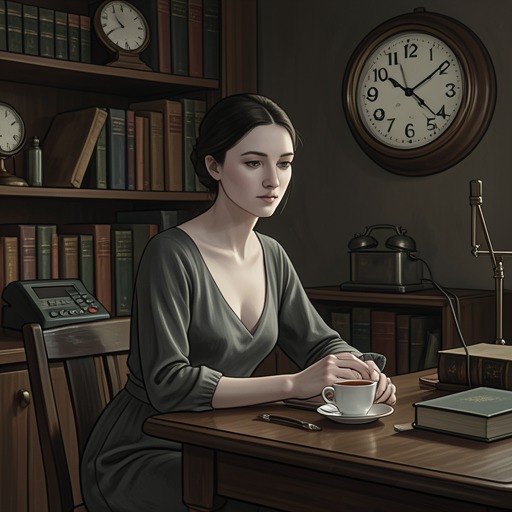
When Craddock is shown into her large bedroom, Belle lies in a canopied bed. Although only about seven or eight years older than Letitia, her fragility makes her seem older. The contrast between her apparent vulnerability and her alert manner shapes their meeting: she can take an interest in the police visit and ask after Letitia, but her capacity for sustained conversation is precarious.
Her Account of a Lucky Life
Belle’s own understanding of her life resists a simple account of deprivation. She tells Craddock that she had the things that made life worthwhile, even though they were later taken from her. She had been pretty and gay as a young woman, married the man she loved, and says that his love never ended. Their child died, but she had him for two precious years. Physical pain has been part of her life, yet she says that experiencing pain has also taught her to value the periods when it stops. She has, moreover, always received kindness from others. On these grounds, she calls herself lucky.
Her account does not deny illness, bereavement, or loss; it places them alongside love, memory, and gratitude. That distinction matters to the way the story presents her. Belle is not merely an invalid whose condition makes her an instrument of suspense: her expressed attachment to life gives the approaching end a personal dimension, while her recollection of what she has experienced supplies a perspective of her own.
The Will and the Alternative Heirs
Belle’s health is bound to the conditions of Randall’s will. He died a very rich man without children and left his fortune in trust for Belle during her lifetime, with the remainder passing absolutely to Letitia. Letitia points out to Craddock that the arrangement carries a second condition: if she predeceases Belle, the money would go to the legal offspring of Randall’s only sister, Sonia. Letitia identifies Sonia’s husband as Dmitri Stamfordis and recalls that Randall considered him a crook.
Belle explains that she herself prompted the alternative provision. When Randall told her about the will, she asked what would happen if Letitia died before her. Randall initially insisted that he had no one to whom the money could go. Belle reminded him of Sonia; because he objected to allowing Sonia’s husband to benefit, Belle proposed Sonia’s children instead. Randall grumbled but included them in the will. The provision was thus not an accidental afterthought: Belle deliberately raised the possibility and helped determine how the fortune would pass if Letitia died first.
The family had subsequently vanished from the Goedlers’ knowledge. Belle says that she and Randall had forgotten Sonia after their disagreement and that she has heard nothing of Sonia or her children since. They might be dead or elsewhere. The will consequently directs the inheritance toward heirs whose present identities and whereabouts are uncertain, while making their legal claim depend on a specific sequence of deaths.
A Deadline in the Investigation
That sequence gives Belle’s condition immediate force in the murder investigation. Letitia argues that Patrick and Julia would have little reason to kill her for financial gain if they could simply wait a few more weeks for Belle to die. Craddock’s question exposes the important qualification: Letitia’s death before Belle would redirect the fortune to Sonia’s offspring. The inheritance cannot be understood merely as money soon to become available; the order in which the two women die determines who receives it.
As the investigation continues, the police recognize that Belle may die at any moment. Craddock points out that this leaves the unknown murderer unable to wait, even though the original plan has failed and the suspects are under observation. Her failing health therefore imposes a deadline on the inquiry: delay could alter the inheritance and the urgency of the crime. The same approaching death that makes Belle’s personal circumstances poignant also tightens the plot’s financial and investigative stakes.